The decline of Hong Kong movies and the booming box office in the Mainland: Is a new era of film and television marketing coming?
Pay close attention to the film school and say goodbye to the film shortage.
Film school
Vol.2768
Ng Man Tat’s death.
It has aroused the nostalgia of many post-80 s and 90 s generations.
The Hong Kong movies behind Ng Man Tat were once the common memory of a generation.
Some people say that Ng Man Tat’s departure.
It also took away the few clouds left in Hong Kong movies.
The generation after 1980s and 1990s witnessed the glory and decline of Hong Kong films.
With the aging of the older generation of local Hong Kong filmmakers and directors such as Bi Zhouyi, Tsui Hark, Wong Kar-wai, John Woo and Chen Musheng, it may be difficult for Hong Kong films to return to the golden age.
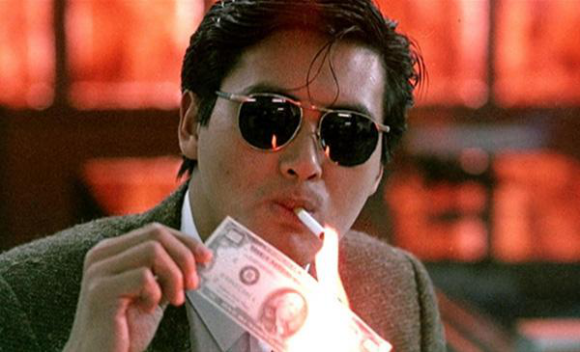
There are many theories about why Hong Kong films have declined from "Oriental Hollywood".
For example, Hong Kong’s local market is too small, and there is a talent gap. Under the impact of Hollywood blockbusters, the decline of Hong Kong films is inevitable. In addition, many excellent directors and actors are gradually going north to the mainland.
Under the framework of CEPA, from production to distribution, both Hong Kong and the Mainland have further opened the restrictions on co-production, and the local market in Hong Kong is getting smaller and smaller.
If we explore carefully, an important reason why Hong Kong films are marginalized is that they do not occupy the center of the audience’s public opinion topic.
Most of his creative thinking still stays in the 1990s, which is out of touch with the current creative environment.
Today, users’ attention is fragmented, information receiving channels are diversified, and film marketing channels and positions have changed.
But in fact, the Hong Kong film industry has not followed the trend of the times well and evolved its marketing.
Consumers have gone through several generations of traffic platform changes. When a number of commercial films fight for publicity, cinema layout and traffic topics, many Hong Kong films are too low in publicity and marketing, which leads to many good films with good stories and good expressions being squeezed by cinemas because of their failed promotion.
Earlier, Zhong Shaoxiong, a Hong Kong director, said with emotion that good movies may be submerged in the marketing era.
On the other hand, mainland movies are another scene.
Under the background of limited attendance, the 2021 Spring Festival stall has achieved "the strongest Spring Festival stall in history".
Looking back on the whole schedule, the dramatic reversal scene is that Hi, Mom overtook "Tang Tan 3" at the box office, and both of them advanced into the top five in the box office list of historical films.
Behind Hi, Mom’s counter-attack to become the box office champion, there is a common role of being in the right place at the right time, but the emerging digital media has played an important role in film marketing.
For example, at the beginning of 2021, Tik Tok cooperated exclusively with 7 major Chinese New Year films, and directly diverted users to the ticketing platform through vouchers and cash subsidies, and introduced hot search lists of various movie topics at the search level.
Among them, # Hello, Li Huanying, it’s so crying. The topic won the first place in the hot search in Tik Tok.
One of the short videos is believed to have been brushed by many people: a boy said that the movie was not good at all, but he cried the next second. The video praised 300w W.

The new traffic end of short video has become the key chip of this box office war, and the dominance of the movie topic agenda is shifting.
From the decline of Hong Kong movies to the triumph of mainland movie box office, behind this is the difference between the old and new film and television marketing, which maps.New Battlefield and Small Trend of Film Marketing.
On the differences between the old and new film and television marketing thinking from the four stages of film marketing
Today, film marketing has gone through four stages.
The first stage: from lack of marketing awareness to awakening of marketing awareness.
In the 1980s and 1990s, the concept and strategy of film publicity in China were mainly to find the media to do some publicity and put up some posters in the cinema poster column.
In 1995, Hong Fan District, starring Jackie Chan, was the first to be released in the Spring Festival and was a box office success.
In the second year, Police Story 4: Simple Tasks became the explosion of the Spring Festival again, and the concept of "schedule awareness" and film marketing was born.

After 2000, the movie "Hero" smashed 20 million high publicity expenses and swept the headlines of major media and entertainment sectors, sending many Chinese people who did not like to go to the cinema to consume movies.
The marketing awareness of the film industry began to awaken at this time.
The second stage: the competition of film marketing, from traditional media to portal website.
At the beginning of 2000, with the advent of the Internet era, the competition of film marketing, from television, newspapers and magazines, all covered to occupy an important position in the four major portals.
In the embryonic period of the Internet from 2000 to 2003, blogs, post bars and video websites based on PC interconnection also began to become important positions for film marketing and promotion.
After 2006, with the explosive growth of Internet users, forums, portals, QQ and other platforms have a deeper connection with film marketing.
After Hero, The Promise made conscious use of the Internet by opening the Promise homepage and the Promise Forum. Later, films such as House of Flying Daggers, Kung Fu and world without thieves launched an integrated media promotion strategy by combining the schedule strategy, star brand strategy and the Internet.
In the third stage, the position of film marketing shifted to social media, and the fan marketing model rose.
After 2010, with the rise of dual micro social media platforms, the position of film marketing further shifted to social media platforms.
It also brought the 2011 box office dark horse to the domestic film industry-"33 days of lovelorn". At that time, the film’s main creator created hot spots around Singles Day in social communication channels, and the interaction among the main creator, the star V and the grassroots bloggers created word of mouth, turning the film topic into a social topic.
With a total investment of less than 15 million, "33 days of lovelorn love" won 350 million box office.
Along the path of 33 Days of Lovelorn Love, Han Han, the director of "See You Later", has created hot topics such as "National Father-in-law Making Movies" on social media. Later films such as "It’s too embarrassing for people to stay on the road again" and "monster hunt" are all marketed by fans through social media, and many small and medium-sized films have ushered in their own spring under the new marketing pattern.
In the fourth stage, short video has become a new marketing battlefield.
In 2017, Ex-3: Goodbye to Ex-3 was a great success in Tik Tok by crying, breaking up and eating mangoes, which became a landmark event in film marketing in Tik Tok.
My People,My Country attracted a large number of users to upload original content related to the film before the screening, and obtained a large number of "tap water". Then, Li Huanying attacked Tang Tan San, and Tik Tok film marketing played an important role in reversing the box office disadvantage.
If we review the four stages of film marketing, we will find that this is basically a road along the Internet traffic. The first stage of the marketing model is almost blind, and the box office depends on the weather.
The second stage is the internet portal era and online ticketing era of film marketing. At that time, the effect of film marketing depends on the location and traffic coverage of portals and forums. At this stage, film marketing began to have digital guidance.
The third stage is the era of social media and fan economy. At that time, the "rice circle girls" gave birth to a large number of movies with poor reputation but also won good box office for their idols.
In today’s era when movie viewing tends to be rational, high-quality content is becoming the core driving force of the market, and the short video platform represented by Tik Tok is becoming an indispensable and important channel for film announcement.
From traditional media marketing to social media platform to short video marketing, the iteration of film marketing is essentially to solve two pain points in the film industry. One is how film marketing can reach the target consumers more effectively.
Kevin A. Yoder, former executive vice president of Fox Research and Strategy in the 20th century, pointed out that the duration of contemporary consumers’ attention has been reduced to about 8 seconds. In the era of information surplus, film marketing must make a breakthrough and form a differentiated cognition.
How to make marketing more efficient is the pain point that all filmmakers have been trying and breaking through at all stages.
The second is how to create a better word-of-mouth fission and promote the box office.
Looking at the film market in recent years, there are not a few films that rely on word-of-mouth counterattack. Word-of-mouth management plays a decisive role in the box office. According to Fan Ying’s report, the more polarized the word-of-mouth of films, the worse the box office performance.
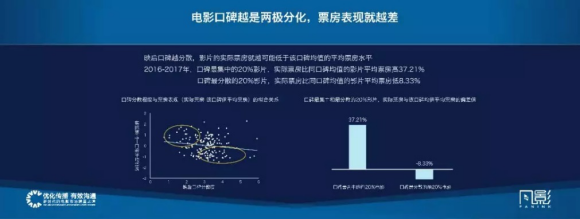
To solve this problem, it is essentially to manage the word-of-mouth expectation of film marketing. The film marketing in the first three stages is a "one-shot sale" that ends when the audience is sent to the cinema.
In the fourth stage, we began to manage the trend of consumers’ evaluation system after watching movies. Behind the counterattack of "Li Huanying", we can see that the word-of-mouth was promoted by high-quality content and short video marketing, and the continuous spread of positive word-of-mouth led more audiences to enter the cinema.
By the fourth stage today, the two pain points of film marketing can basically be solved.
How to play short video marketing reform?
After several generations of traffic platform changes, short video is becoming an important position for film announcement.Can it become a key link in the reform of the marketing system of the film industry, and what can be done to maximize the marketing effect?
For filmmakers, the first thing to think about is how to have a set of systematic publicity and word-of-mouth management operation system on the short video platform, and it is very important to use the rules of the platform to serve the film marketing, including live ticket sales, online roadshows, star live broadcasts, and pull-tab explanations.
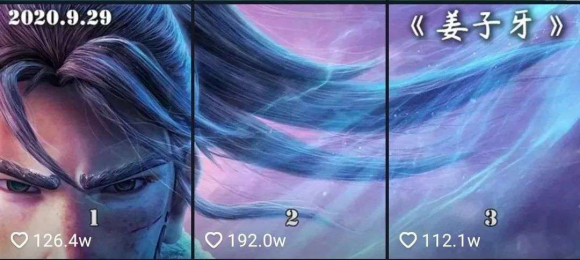
We can see that the huge engine platform not only meets the basic marketing function, but also upgrades the functional experience such as live broadcast and the drainage of materials to the ticket purchase page, and the pull-tab commentary has become an effective tool to attract audiences at this stage.
Taking A Little Red Flower, which was released in the New Year’s Eve, as an example, the large-scale and official number of Tik Tok film and television entertainment matrix were interpreted in a pulling way, acting analysis, and movie teardrop pushing, which played an important role in reaching the target audience.
Secondly, we know that the film product has particularity and uncertainty. The core of the box office is whether the content caters to consumers’ tastes. In the process of marketing, it is necessary to constantly release the "selling point" of the film and establish the audience’s discussion interest.
How to release the selling points of movies in batches and create new topics on the short video platform, and try to circle the long-tailed users at different stages as much as possible is very critical.
The short video platform has its personalized recommendation mechanism and topic hot list mechanism, which can split multiple "selling points" to reach interested users.
What Li Huanying has done well in this respect is to establish the audience’s discussion and interest through emotional topics, and then launch it based on this marketing selling point. In addition to the emotional impact of maternal love, there are many selling points such as cast, crossing theme, Jia Ling’s director, goddess and woman, tears in laughter and so on.
In the middle and late stage, it is very important to manage the market users’ minds and the trend of topic word of mouth.
On short video platforms such as Tik Tok, the ecological mechanism of huge engine content and refined data capabilities provide users with a second creative space, and the draft soliciting mode can also enhance the popularity of movies before screening.
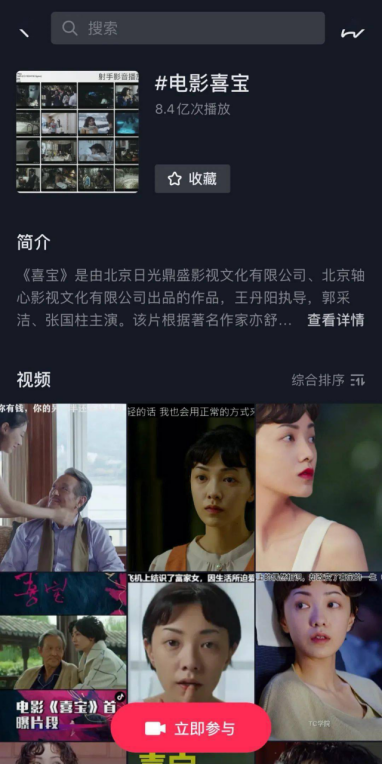
In fact, the counterattack of the movie "Xibao" is the mode of soliciting contributions by grasping the "emotion" to spread to the content as the core in marketing and relying on a huge number of engines. On the first day of soliciting contributions, the creators produced 10 explosions that broke tens of millions of plays, driving the growth rate of the ticketing platform as high as 3123%, which is exactly the same as Hi, Mom’s marketing style-that is, the marketing pre-action of the film side is obvious, which has a deep impact on the audience’s decision-making of watching movies.
At the recent event "Movie Marketing Trend of Huge Round Table in 2021", Miki, publisher of movie magazine, also thought that the greatest success of movie Hi, Mom was the fermentation of users’ second creation on short video platform.
In fact, we can see that before the release of "david lee, Li Huanying", 160 short video trailers were posted on its official account in Tik Tok. In addition, the creators and talents of film and television synthesizers from all walks of life were invited to help him with the announcement through the solicitation mode of a huge number of engines.
The number of videos of ordinary users was about 20,000 before the release, and it became 4 million after the release. The spontaneous secondary creation of users and the continuous spread of positive word-of-mouth led more viewers to enter the cinema, and their word-of-mouth and topics formed a positive cycle.
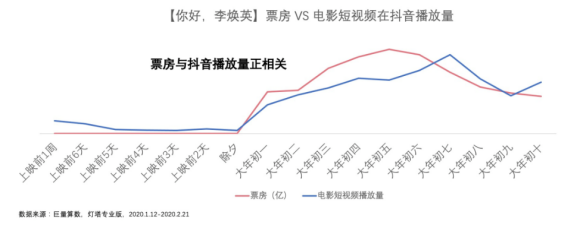
What the professional marketing team should do in this process is to follow the trend.
In addition to trailer exposure, creative interaction and talent boosting, we can use short video soliciting mode, challenge, national task and other modes to "play" from finding users to arriving users, and then promote the spread of links and tap water in all links.

Small trend in the future: short video marketing reconstructs the film distribution industry chain?
Today, about 70% of films are losing money. One of the major reasons behind this is that consumers’ appreciation level is constantly improving. In a fragmented environment, consumers will choose whether to watch and disseminate product information. It is increasingly difficult for film marketing to break through all kinds of information interference and reach consumers.
In the era of fragmentation, users’ attention is limited, and the essence of film marketing is to win more users’ attention in a limited time.
Therefore, with the development and promotion of technology and Internet, based on the demand for attention, the promotion and distribution links in the middle reaches of the traditional film industry chain have changed. Film distribution is the key link to determine the box office, and high-quality platform channels and traffic are its box office lifeblood.
Short video is naturally the medium and carrier of the film, and it can better grasp the consumption data portrait of the film industry.It has a growing impact on the box office of movies, and the joint operation and connection between short video platforms such as Tik Tok and the film and television industry is also becoming more and more.In fact, it has the opportunity to incite the cooperative development of more links in the film industry.
We can see that Tik Tok has gradually penetrated into the upstream and downstream of the film industry chain. By the end of November 2020, there were more than 3,000 Tik Tok stars. There are more and more content outputs from film and television creators and stars. As a co-producer, Tik Tok has produced many popular films including My People,My Country, My People My Homeland, Shock Wave 2 and Detective Chinatown 3.
Judging from the marketing strategy of the huge engine, it has been promoting the "integration" of the early content production and broadcasting of the film and television comprehensive, and has its own ideas on the creation of the IP of the film and television comprehensive, relying on the interactive mode of soliciting contributions and the task of the whole people.
One of the signals here is that the distribution of movies will change from 2B to 2C-That is, how to better reach consumers and know their needs and interests is becoming more and more important. On this basis, the system of film creation, shooting and production is reconstructed.
According to Kevin A. Yoder, executive vice president of FOSS research and strategy in the 20th century, the role of consumer research is to help you find the Question that can stimulate consumers’ interest most in movies, and create the most influential visual materials accordingly.
Why did Hong Kong films produce so many excellent films in the past? Xiang Huaqiang, who once produced classic movies such as Playing Truant, Gambling God and so on, said earlier that in his time, no matter whose script they were, they had to read it first, and then they would choose to shoot it if they thought it was ok. After filming, they would invite a group of viewers to watch the screening outside, and then do a questionnaire survey to know where it was wonderful and where it was redundant.
Some people who need to shoot again will shoot again immediately, and everything is based on the audience’s preferences.

It can be seen that in the past, the older generation of Hong Kong filmmakers reached out to consumers’ interests through questionnaires, grasped the data of consumers’ portraits, and then fed back the film content and re-optimized their works.
This is similar to the mode of shooting and broadcasting in the Korean entertainment industry, that is, the plot is created based on user needs and data research, and the fate and drama setting of Ouba are also determined by the audience’s demand for the plot, and it runs through the whole system of content production, planning, screenwriter, pre-and post-preparation, filming, broadcasting and distribution.
At the movie marketing trend activity of the 2021 Huge Round Table, guest Zhu Huilong talked about such a point: the marketing of China movies is one of expected management, and whether the plays stand in the market perspective.
"david lee, Li Huanying" has spread all over the market with the word "sincerity". Chen Duye, vice president of huge engine marketing, also thinks: "Only by knowing the user and the content at the same time can we make a good movie."
Obviously, with the help of the emerging short video platform, there are better conditions to create and optimize plays from a market perspective based on refined data capabilities, and help professional links in all links through the marketing team.
The decline of Hong Kong movies may often be reflected in the fact that the creative level of plays is not oriented to the current market environment. From The Anti-Corruption Storm to The Apostles, Anti-Drug Sweeping, Chasing the Dragon and other classic gangster films in Hong Kong in recent years, they are either brotherly love or dueling, with obvious theme limitations and consumers’ aesthetic fatigue.

As Tony Leung Ka Fai said with emotion four years ago, "Hong Kong is a very small place. From the 1960s to today, the story of the rise and decline of the underworld and the corruption and incorruptibility of the police force has all been told. What else can we talk about?"
In fact, whether it is a Hong Kong movie or a mainland movie, how to tell the next story depends on what kind of story the audience likes in the future, and where their viewing needs, attention, interest trends and emotional points are.
Whoever can maximize the interest, attention and emotional appeal of users is expected to be the winner.
From this logic point of view, the greater role of film marketing lies in the accurate positioning of audience needs, which can actually force the film content creation theme to change and optimize.
However, the shortcomings of the real film and television industry are also here, just as everyone is discussing at the huge round table: the China film market lacks directors who really have market orientation and know how to market film works.
At present, domestic directors pay more attention to creation and lack the concept of advance marketing, but this should not be a link that directors must do, but a more professional and comprehensive marketing team is needed to help.
The so-called industrialization should be a professional link of all links.
Judging from the creative environment of the whole film market, if it is more and more difficult to grasp the audience’s taste, then the future trend may be the marketing leader. On the basis of managing consumers’ expectations of the film, the content production and distribution of the film distribution industry chain will be forced to change. In the past, the production, distribution and marketing links were broken.
But nowadays, no matter whether filmmakers get together to enter short videos or the short video platform is more and more closely related to the film industry,The way of "integration" of early content production and broadcasting of film and television synthesis is also running through.
Behind these trends is actually the epitome of the trend of the times.There are more signs and possibilities to build a film industrialized content production system closely connected with marketing.
From this point of view, short video marketing is the forerunner to reconstruct the film distribution industry chain and form a more reasonable content production system.
It is likely to be a small trend of film industrialization upgrading in the future.